
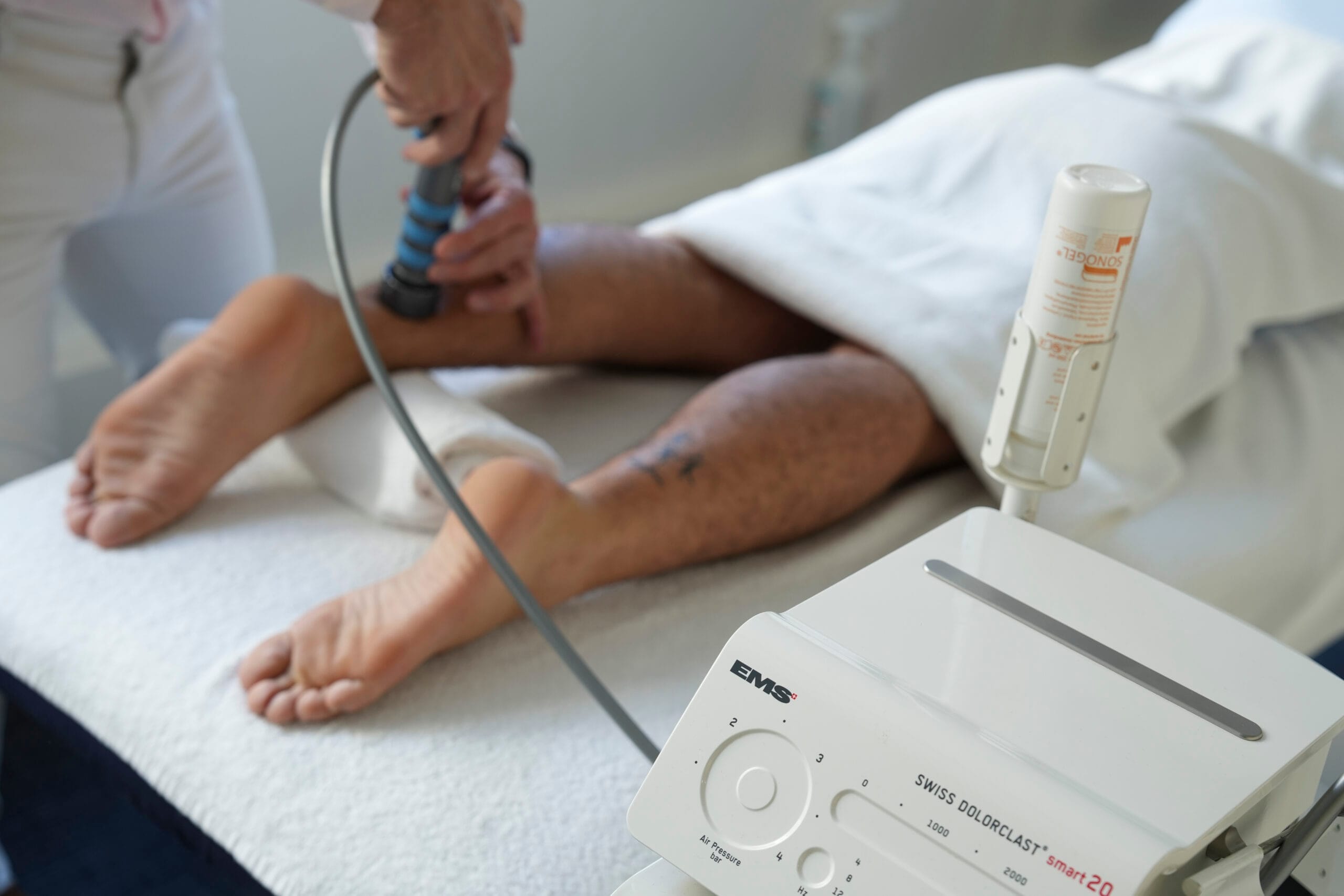
Shock Wave Therapy: A Patient Guide
Shock Wave Therapy:
Shock wave therapy is a non-surgical treatment for some ongoing muscle, tendon, and joint problems. It uses sound waves directed at the painful area to encourage healing and reduce pain. It does not involve an electric shock.
What is it used for?
Shock wave therapy may be recommended for conditions such as:
- Heel pain and plantar fasciitis
- Achilles tendon pain
- Tennis or golfer’s elbow
- Shoulder pain caused by calcium deposits and tendon changes
- Pain on the outside of the hip
- Patellar tendon pain below the kneecap
What happens during treatment?
A clinician applies gel to your skin and places a handheld device over the painful area. The device delivers repeated pulses, which may feel like firm tapping.
A session usually takes 10-20 minutes. You may need several sessions, often about one week apart.
Is it painful?
Treatment can feel uncomfortable, but the intensity can usually be adjusted. You may have temporary soreness, redness, swelling, bruising, numbness, or tingling afterward.
When will I notice an improvement?
Some people notice early improvement, while others improve gradually over several weeks. Shock wave therapy does not work for everyone. Your results may depend on your condition, how long you have had symptoms, and whether you follow your exercise or rehabilitation plan.
What should I do after treatment?
Follow the advice given by your clinician. In general:
Continue prescribed exercises unless advised otherwise.
Avoid strenuous or high-impact activity involving the treated area for the period recommended by your clinician.
Contact your clinician if you develop severe pain, significant swelling, or any unexpected symptoms.
Is it suitable for everyone?
Shock wave therapy may not be suitable if you are pregnant, have a bleeding disorder, take blood-thinning medication, or have an infection or tumour near the treatment area. Tell your clinician about your health conditions and medications before starting treatment.
Shock wave therapy works best as part of a broader treatment plan, which may include exercise, activity changes, and other rehabilitation. Your clinician can explain the expected benefits, risks, alternatives, and likely costs for your situation.